Plastically Speaking - The Truth Behind Plastics Part II
How to Minimize your Exposure to Plastics

There are relatively simple ways of reducing your exposure to chemicals in plastics. As I mentioned in my previous post it's not possible to eliminate all plastics from our lives, therefore it's advisable to reduce your exposure to plastics where it matters most - mainly where plastics touch your food and mouth and are more likely to end up in your digestive system.
Here is some general advice on how to minimize potential toxicity of plastics which I compiled based on available literature:
1. With your food use plastics type #4 (LDPE), #5 (PP), #1 (PETE) and #2 (HDPE). Avoid #3 (PVC), #6 (PS) and #7 (other).
2. Use alternatives to plastic packaging whenever possible.
3. Don't microwave food in plastic containers even if they claim to be 'microwave safe'. Heat can break down plastics and release chemical additives into your food and drink. Ceramic or glass food containers (like Pyrex) are better to store and heat your food and drink.
4. Don't use cling wrap (which is made of PVC) in a microwave. Use a ceramic plate or paper towel instead. If you do use plastic, don’t let the plastic touch the food.
5. Don't used plastic containers for hot, fatty or highly acidic food as there is greater leaching of chemicals into these foods.
6. Avoid old, scratched food plastic containers. Exposures to plastics chemicals may be greater when the surface is worn down.
7. Don't reuse single-use plastics. They can break down and release plastics chemicals when used repeatedly.
8. Wash plastics on the top rack of the dishwasher, farther from the heating element, or, preferably, by hand. This will reduce wear and tear.
9. When using an electric mixer, choose glass or Pyrex instead of plastic to avoid chipping bits of plastic into your food.
10. Use wooden cutting boards -- but care for them properly to minimize bacteria.
Why plastic bottled water is such a bad idea

Avoid plastic bottled water unless you are travelling or live in an area where the quality of water is questionable. Bottled water, because it is less regulated, has less-certain purity and safety than tap water, and is much more expensive. It's generally a good idea to install a home water filter or use an inexpensive filter pitcher instead of buying bottled water. This way you will have much purer, healtier and less expensive water. You will also contribute to reducing landfill waste and exposure to chemicals that leach from the plastic. Remember that plastic bottled water is yet another brilliant business idea which seems to have taken over most of the well-developed countries. Use safer alternatives when you need to take water with you such as a glass or stainless steel bottle without plastic or epoxy lining. If you use a polycarbonate (#7) water bottle in order to reduce leaching of BPA, do not use it for warm or hot liquids and discard old or scratched bottles. Water bottles from #1 or #2 plastics are recommended for single use only. Avoid leaving plastic bottled water in direct sunlight in places like your car or a balcony as it will increase leaching of the chemicals into the water.
Safer Alternatives for Kids

 Many baby bottles are made from polycarbonate plastic #7 (which can potentially leach BPA into baby food), including leading brands such as Avent, TommeeTippee and some DrBrown bottles. These bottles are usually clear and hard. Fortunately, there are more and more baby bottles made from #5 (PP) which are pliable and more milky-coloured. The brand which I favour is Medela, but there are many other good brands which produce safer alternatives to polycarbonate bottles. Avoid bottles, sippy cups, training cups and many others made of polycarbonate plastic at all costs and substitute them with glass bottles or made of #5 plastic (PP).
  It's not advisable to pour boiling water into plastic feeding bottles. Prepare the mixture in a safe container such as a ceramic or glass bowl and transfer it to a plastic bottle once it's cooled down.
  Give your baby natural teethers like frozen washcloths or natural, uncoated wood. Plastic teethers could have harmful additives that leach when chewed. Don't allow your baby or young child to handle or chew on plastic electronics (the remote, your cell phone) because they may be treated with fire retardants.
 Look for toys made of natural materials, like wool, cotton, and uncoated wood. While phthalates were recently banned in new children's toys, they may be found in older toys before the ban went into effect, as well as in shower curtains, inflatable beach toys and raincoats.
Why canned food is definitely not good for you
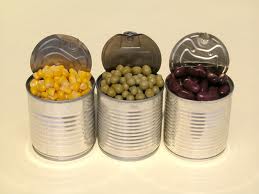
As I mentioned in part I, Bisphenol A (BPA) is a controversial chemical used in polycarbonate plastic containers #7. Its toxicity involves mimicking certain hormones which can lead to serious health consequences (please see my previous post). When I had my baby 4 years ago, the only available BPA-free feeding bottle on the Irish market was Medela's breastfeeding storage bottles. Currently the choice is much wider which suggests that things are changing for better. Due to increasing consumer awareness more and more manufacturers offer their food products in plastic containers which don't contain BPA.
Unfortunately, majority of mainstream canned foods are packaged in metal cans which are lined inside with BPA. Due to certain food processing procedures invloved in manufacture of canned foods, BPA leaching into foods is much higher than in beverages in polycarbonate bottles #7. Therefore, there is a growing support for removing BPA from metal cans lining. Currently new alternatives to BPA are being researched which could prove to be equally versatile and economically viable. In the absence of such widely available safer alternatives, it's wise to avoid all canned foods. Moreover, canned foods are nutritionally inferior to fresh foods.
Although current general scientific advice on BPA in food containers is that leaching of BPA into foods is not significant enough to cause any adverse health problems, many NGO organizations warn that precaution should be exercised in relation to this potent toxicant.


